wellness
What Is Nonenal? Understanding Body Odor and Everyday Freshness

In This Guide
Body odor varies from person to person. Here’s what research says about 2-nonenal, how it may relate to age-related odor changes, and practical ways to support everyday freshness.
Body odor can vary with daily activity, life stage, and many other factors. If you’ve heard of nonenal, you may be wondering what it is, what it smells like, and what everyday care can do.
In brief, 2-nonenal is a compound studied in connection with human body odor. Research has found an association between its presence and age-related changes in skin-surface lipids, but nonenal is only one part of a complex odor picture—and not everyone experiences the same changes. Let’s look at what is nonenal and what may help you feel fresh day to day.
What Is 2-Nonenal?
2-Nonenal (also called nonenal) is a volatile, unsaturated aldehyde. Researchers have detected it in human body-odor samples and studied how it may relate to changes that occur with age.
In a 2001 study of adults ages 26 to 75, 2-nonenal was detected only in the older participants in that study sample. The researchers also reported an association with certain skin-surface lipid measures. That finding does not mean nonenal explains all body odor or that everyone develops a noticeable nonenal-related scent. Read the study by Haze and colleagues.
What Does Nonenal Smell Like?
Descriptions can vary. The 2001 study described 2-nonenal as having greasy and grassy odor notes. In everyday descriptions, people may compare a similar scent to something musty, onion-like, old cardboard, or aged beer. These are subjective comparisons, not a reliable way to identify a specific compound—and people may perceive the same odor differently.
So if you’re asking what does nonenal smell like, there isn’t one smell that everyone will recognize in the same way.
Why Can Body Odor Change With Age?
Skin-surface secretions and lipids can change over time. Researchers have explored whether changes in skin lipids and their oxidation may contribute to differences in body odor with age. In laboratory research, lipid peroxidation has been shown to generate trans-2-nonenal from fatty acids found in human sebum. This offers one possible pathway; it is not a complete explanation for every age-related odor change. Read the research on lipid peroxidation and trans-2-nonenal.
Another study found that participants could distinguish body-odor samples from different age groups. The samples from the oldest group were rated as less intense and less unpleasant than samples from the younger and middle-aged groups. Age-related odor differences, in other words, are not automatically “bad” or unpleasant. Read the study by Mitro and colleagues.
Is Nonenal the Only Cause of Body Odor?
No. Human body odor is complex and can reflect a mix of skin-gland secretions, activity, skin-surface bacteria, clothing, and other personal or environmental factors. Research describes body odor as a mixture of components rather than the result of one compound alone. Mitro and colleagues discuss the complexity of human body odor.
Body odor by itself is not a measure of someone’s cleanliness, and it cannot identify a person’s health status. Bodies and routines differ, so odor can differ too.
How Can You Manage Body Odor and Everyday Freshness?
If you searched for how to get rid of old people smell, you may simply be looking for practical ways to manage a noticeable odor. That phrase can feel stigmatizing, and body odor should not be treated as a judgment about someone’s age or cleanliness. The following habits may help manage odor on skin and fabrics:
- Cleanse gently. Wash as needed for your routine, rinse well, and pat skin dry. Follow the directions for any product you use, and avoid harsh scrubbing.
- Consider odor-care formulas with botanical ingredients. Some products use Japanese persimmon extract or green-tea polyphenols, sometimes described as tea tannins, to help bind or reduce certain odor molecules. They may be worth considering as part of a routine, but effects vary by person and product formula. The research cited here does not establish that these ingredients stop nonenal from forming or completely neutralize it on the body.
- Wash clothing, towels, and bedding. Skin oils can remain on fabric. A detergent formulated for oily soils—or an enzyme detergent containing enzymes such as lipase—may help loosen oily residue from washable clothing and bedding. Follow garment-care labels and detergent directions. Laundry products are for fabric, not skin.
- Keep fabrics clean and fully dry. Change clothing, towels, and bedding as needed, and allow washed items to dry completely.
These steps may help reduce odor on skin or fabric and support a fresher everyday feel.
Can Nonenal Be Completely Removed or Neutralized?
People often ask what neutralizes nonenal. The studies cited in this article examine nonenal and body-odor changes; they do not test whether a particular body wash or persimmon soap can completely remove or neutralize it. Botanical odor-care products may help some people manage perceived odor, but their effect depends on the full formula and should not be described as “permanent” or “100%” removal without product-specific evidence.
Persimmon soap can be one option for everyday body cleansing. Whether a particular product helps with a specific odor is a separate question that calls for evidence about that product—not an assumption based only on research about nonenal.
If you’re wondering, “Does persimmon soap work?” our guide, Does Persimmon Soap Help With Body Odor?, will look at the question in more detail.
Frequently Asked Questions
Is nonenal a real thing?
Yes. Researchers have detected 2-nonenal in human body-odor samples and studied its relationship with age-related changes. It is one compound discussed in body-odor research, not the explanation for every odor.
Does everyone develop nonenal as they age?
Current research does not establish that everyone develops a noticeable nonenal-related odor or experiences it at the same age. Body odor varies from person to person.
Can nonenal be removed from the body?
Everyday cleansing may help manage surface odor and support a fresh feel. The studies cited here do not show that cleansing completely removes nonenal or stops it from forming.
Is body odor a sign of poor hygiene?
Not necessarily. Body odor can be influenced by multiple factors, so it should not be used on its own to judge someone’s hygiene. A comfortable, consistent cleansing routine can be one part of everyday care.
A Freshness Routine That Feels Like You
Nonenal is one topic in body-odor research, but it does not explain every change in body odor—and it does not need to become an embarrassing label. A comfortable routine can help you focus on how you feel day to day.
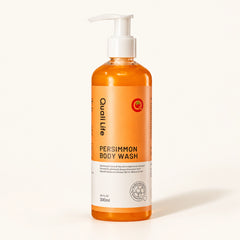
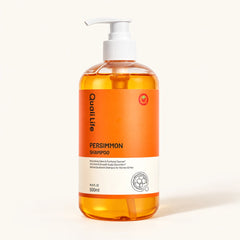
Explore QualiLife Persimmon Body Care for everyday cleansing options. Follow the directions on each product.
Research Referenced
- Haze S, et al. “2-Nonenal Newly Found in Human Body Odor Tends to Increase with Aging.” Journal of Investigative Dermatology, 2001. DOI link.
- Ishino K, et al. “Lipid Peroxidation Generates Body Odor Component trans-2-Nonenal.” Full text.
- Mitro S, et al. “The Smell of Age: Perception and Discrimination of Body Odors of Different Ages.” PLoS ONE, 2012. Full text.