hair scalp
How to Choose a Shampoo for an Oily Scalp

In This Guide
Choosing a shampoo for an oily scalp can feel surprisingly complicated. One bottle promises oil control, another offers a deep cleanse, and a third highlights its sulfate-free formula. How do you choose the right shampoo when they all sound like a good fit?
Start with your scalp's cleansing needs, then consider your hair's condition. Oily roots and dry ends may need different care. You do not have to choose between a fresh-feeling scalp and manageable hair.
These practical questions can help you narrow down your options.
1. Start With the Problem You Want to Address
Before comparing ingredients, think about what bothers you most:
- Greasy roots and flat-looking hair: Start by considering a regular cleansing shampoo intended for oily hair or scalps.
- Oily roots with dry, tangled ends: Look at both cleansing performance and how your lengths feel afterward, then plan separate care for your ends.
- Hair that feels coated after styling: Consider product residue as well as oil, especially if you regularly use waxes, gels, or hairspray.
- Oiliness with recurring flakes, itching, or redness: Your scalp may need attention beyond a stronger cleanse.
You do not need to give yourself a permanent “oily hair” label. Identifying your main concern makes shopping easier than looking for one product that promises oil control, dandruff care, volume, and repair all at once.
If you are still unsure what is contributing to the greasy feeling, read our guide to why hair gets greasy so fast for a closer look at the possible factors.
2. What Shampoo Is Good for Oily Hair? Compare These Three Types
If you are wondering, “What is the best shampoo for greasy hair?” start by comparing what each type is designed to do. That gives you a more useful starting point than a brand name or a single featured ingredient.
Regular Cleansing Shampoo: A Starting Point for Your Routine
If your main concern is oiliness, without noticeable flakes or scalp discomfort, consider a formula intended for oily hair that fits your regular washing needs.
Terms such as “oily hair,” “daily cleansing,” and “balancing” can help you build a shortlist. Then pay attention to the results: Do your roots feel clean? Does your scalp feel tight? Are your ends harder to detangle?
Your hair does not need to feel rough or stripped for a wash to count as effective. Both cleansing and comfort belong on your checklist.
Clarifying Shampoo: An Option for Product Buildup
If you often use styling products or your hair feels coated, you might consider a clarifying shampoo for oily hair.
Its purpose differs from that of a regular-use cleanser. Having oily roots does not automatically mean you need a stronger wash every time. Follow the product's directions and consider both the amount of residue and the condition of your hair.
DermNet's shampoo guide distinguishes everyday formulas from deep-cleansing shampoos and notes that overcleansing can contribute to dryness and irritation.
Anti-Dandruff Shampoo: When Flakes Are Part of the Picture
If oiliness comes with recurring flakes or itching, simply switching to a stronger cleanser may not address the problem.
Look for a product specifically labeled to treat dandruff, with an appropriate active ingredient such as ketoconazole, selenium sulfide, or zinc pyrithione. Follow that product's directions. A bottle that mentions tea tree or scalp freshness should not automatically be treated as a medicated dandruff shampoo.
The British Association of Dermatologists' guidance on seborrheic dermatitis explains the role of medicated anti-dandruff shampoos in scalp care. Persistent redness, significant pain, thick crusting, or symptoms that do not improve with directed care are reasons to consult a dermatologist.
3. Read the Label Beyond the Featured Ingredient
You do not need to decode every ingredient to make a thoughtful choice. A few details are especially useful.
Check the purpose and directions first. A regular cleansing shampoo and a dandruff treatment may have different instructions. Contact time, frequency of use, and color-care guidance tell you more than a general promise of “powerful cleansing.”
Treat sulfate-free as formula information. In shampoos, this usually means the absence of sulfate cleansing agents such as sodium lauryl sulfate (SLS) and sodium laureth sulfate (SLES). Other cleansing ingredients still remove oil, so the label alone does not guarantee that a formula will feel more comfortable for everyone.
Consider the whole formula. Tea tree, persimmon extract, or another botanical may appeal to you, but a shampoo's performance depends on the complete formulation. A review in the Indian Journal of Dermatology describes how cleansing agents, conditioning ingredients, and other components are combined to suit different hair types and needs.
Should You Avoid Heavy Oils and Silicones?
If your roots tend to fall flat, consider whether a formula feels too rich for your hair. The softness provided by oils and conditioning ingredients does not suit every hair type equally. If your hair consistently feels weighed down, try adjusting the amount you use or choosing a formula with a lighter conditioning feel.
Silicones are not ingredients that everyone with an oily scalp needs to avoid. They can reduce friction and improve manageability, although some water-insoluble types may accumulate on the hair without adequate cleansing. A review of silicones in hair care discusses both their conditioning benefits and potential buildup. The silicone type, overall formula, and way you use the product all matter; describing every silicone as “trapping scalp oil” oversimplifies the issue.
If you prefer a silicone-free shampoo, use that label as one selection criterion, then assess how light and manageable your hair feels after washing. Silicone-free does not mean oil-free, and it does not guarantee zero residue.
Use the label to narrow your options and your experience to decide what works for you.
4. What Shampoo and Conditioner Should I Use for Oily Roots and Dry Ends?
It helps to separate this question into two parts: What cleansing does your scalp need, and what conditioning does your hair need?
Conditioner helps improve manageability and reduce static. An oily scalp does not mean your ends have no need for conditioning.
| Fine, straight hair with flat roots | Notice whether hair still feels coated or weighed down after washing. | Start with a small amount, focusing on ends that need smoothing. |
| Oily scalp with dry ends | Assess both root freshness and dryness through the lengths. | Concentrate conditioning on dry mid-lengths and ends. |
| Curly or coarse hair | Consider how easily your hair tangles after cleansing, as well as oil removal. | Adjust the amount and coverage to the dryness of your strands. |
| Color-treated or damaged hair | Check for directions relevant to color-treated or damaged hair. | Choose care suited to the current condition of your lengths. |
Choosing shampoo by hair type works best when you also consider your scalp. For example, when selecting a shampoo for an oily scalp and dry ends, you can focus cleansing on the scalp and apply conditioner mainly to the dry sections of your hair.
Your shampoo and conditioner do not both have to prioritize oil removal or rich conditioning just to be a matching pair. Start with your cleansing choice, then adjust conditioner based on how your lengths feel. Follow each product's directions for amount and application.
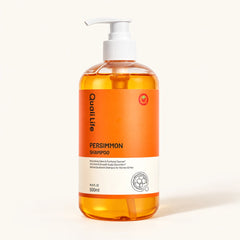
5. Considering a Sulfate-Free Option? Meet QualiLife Persimmon Shampoo
If you prefer a silicone-free shampoo formulated without SLS and SLES, QualiLife Persimmon Shampoo is one option to consider.
Its ingredient list contains no silicones or sulfate surfactants. The formula combines multiple cleansing agents with persimmon extract to help wash away excess oil and everyday dirt from the scalp and hair, reducing the weighed-down feeling that comes with greasiness.
Consider it alongside your other preferences, then pay attention to root freshness, scalp comfort, and how easily your ends detangle. A good fit should match your actual cleansing and conditioning needs.
6. How to Tell Whether Your New Shampoo Is a Good Fit
After switching products, look beyond how soon your roots appear oily again. Consider three things:
- Scalp comfort: Does your scalp feel comfortable after washing? Persistent tightness, stinging, or itching is a reason to stop using the product and reassess. You do not need to finish the bottle if it causes discomfort.
- How your roots feel: After thorough rinsing and drying, do they still feel greasy or coated? Check the amount used, rinsing, and where you apply other hair products before deciding the shampoo is the only issue.
- The condition of your ends: If your roots feel cleaner but your lengths become much drier or harder to comb, the combination may need adjusting. Review conditioner amount and coverage before deciding whether to change shampoos.
To make comparisons easier, try changing one main variable at a time. For example, keep the rest of your routine relatively consistent while trying a new shampoo. This can help you recognize what changed. If irritation occurs, you do not need to keep using the product to complete a trial.
A Simple Checklist Before You Buy
- Do I mainly need regular cleansing, help removing product buildup, or dandruff care?
- Does my hair also have dry, color-treated, or easily tangled sections?
- Do the product's purpose and directions match my needs?
- After use, am I comfortable with how my scalp, roots, and ends feel?
Learning how to choose shampoo can start with one or two clear priorities. Choose a formula that matches your cleansing needs and feels right for your hair, then pair it with care for your lengths. That makes everyday hair care a little simpler.