hair scalp
How to Use Tea Tree Shampoo: Frequency and Application Tips

In This Guide
Your roots feel light and fresh after washing, but by the next day, your hair already looks a little flat. If that sounds familiar, you might be considering a tea tree shampoo—and wondering how to use it. Can you wash with it every day? Should you leave it on your scalp for a few minutes? And what if your roots are oily but your ends are dry?
Using tea tree shampoo is straightforward: thoroughly wet your scalp and hair, apply an appropriate amount, gently cleanse your scalp, and rinse according to the product directions. How often you use it and how long it stays on should depend on the formula, your scalp’s needs, and how your hair feels afterward.
Start with a few simple techniques, then adjust your routine to suit you.
How to Use Tea Tree Shampoo Step by Step
1. Thoroughly wet your hair and scalp
Use water at a comfortable temperature and gently move your fingers through your roots so the water reaches your scalp. If you have thick hair, work in sections, paying attention to the back of your head and behind your ears.
When only the surface of your hair is wet, shampoo can be harder to distribute evenly. Take a moment to wet everything before applying it.
2. Start with a small amount
Follow the amount suggested on the bottle. Spread the shampoo between your hands, then distribute it over your wet scalp and roots. Add a little more if needed instead of starting with several large pumps.
The amount you need depends on the formula, how much hair you have, and what needs washing away. There is no universal pump count for tea tree shampoo, and more foam does not necessarily mean a better cleanse.
3. Massage gently with your fingertips
Use the pads of your fingers to gently work around your hairline, crown, sides, and the back of your head. Avoid scratching with your nails or piling long hair on top of your head and rubbing it together.
The American Academy of Dermatology’s healthy hair tips recommend applying shampoo mainly to the scalp. This helps remove excess oil and product buildup while limiting unnecessary dryness along the hair shaft.
If your lengths have noticeable styling residue, gently cleanse those areas as needed. You do not have to repeatedly scrub your ends every time you wash.
4. Follow the directions and rinse thoroughly
Check your shampoo’s instructions for massage time and whether it needs to sit before rinsing. As you rinse, gently separate your roots with your fingers so the water reaches your scalp, including behind your ears and at the nape of your neck.
Do not stop at rinsing away the visible foam on the surface. And remember: your hair does not have to feel squeaky or rough to be clean.
5. Condition according to your hair type
An oily scalp does not mean your ends need no care. For fine or straight hair, focus conditioner on the ends. Dry or curly hair may benefit from conditioner through more of the lengths. Follow your conditioner’s directions for the amount and application.
After rinsing, gently blot or wrap your hair to absorb water instead of vigorously rubbing it with a towel.
How Often Should You Use Tea Tree Shampoo?
There is no single schedule that works for every tea tree shampoo or every scalp. Frequency depends on the whole cleansing formula, along with the needs of your scalp and hair.
If you are switching to a tea tree oil shampoo, try using it as directed on a day you would normally wash your hair. Notice whether your scalp feels comfortable, whether your lengths tangle more easily, and how oily your roots become between washes. Changing shampoo does not automatically mean you need to wash more often. For help planning your overall washing schedule, see our guide to how often you should wash oily hair.
Can you use tea tree shampoo every day?
Some people can, provided that the product directions allow that frequency and it does not leave their scalp or hair noticeably dry or irritated.
According to Cleveland Clinic’s guidance on washing frequency, fine hair and oily scalps may need more frequent washing, and some people choose to shampoo daily. Dry, coarse, or curly hair may need longer between washes. This is general hair-washing guidance—not evidence that every tea tree formula is suitable for daily use.
Even if you need to wash daily, you do not have to use the same shampoo every time. Choose products that suit your cleansing needs, without adding extra washes just to use tea tree more often.
Using tea tree shampoo for oily hair and an oily scalp
When choosing a tea tree shampoo for oily hair, pay attention to both how fresh your roots feel and whether your ends become dry or tangled.
| What you notice | How to adjust |
|---|---|
| Your roots get oily, but your scalp feels comfortable after washing. | Plan washes around oiliness and the product directions. You do not need to wait until your hair feels very greasy. |
| Your scalp is oily, but your ends are dry. | Focus cleansing on your scalp and roots, avoid repeatedly rubbing your ends, and condition your lengths as needed. |
| Your hair feels noticeably dry after use. | Review the amount, frequency, and conditioning steps. Consider a different formula if needed. |
| You notice redness, itching, or burning after use. | Stop using the product and rinse it out. Do not keep using it in the hope that your scalp will adjust. |
A good fit is about more than how long your hair stays oil-free. Your scalp and hair should also feel comfortable throughout your routine. If your roots seem greasy again soon after washing, explore why your hair gets greasy so fast before assuming you need more shampoo or a stronger formula.
How Long Should You Leave Tea Tree Shampoo in Your Hair?
Follow the directions for your particular shampoo. There is no universal three-to-five-minute rule for tea tree formulas.
Some shampoos tell you to lather, massage, and rinse. Others specify a massage time. Medicated shampoos for certain scalp conditions may have their own contact-time requirements, which should not be applied to an unrelated product.
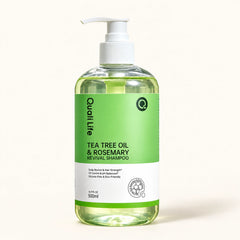
For example, the current directions for QualiLife Tea Tree Shampoo say to thoroughly wet your hair and scalp, apply a small amount, gently massage for one to two minutes, and rinse thoroughly. That is the massage time; it does not call for an additional long wait afterward.
If the instructions on your bottle have changed, follow the label on the product you purchased.
Common Mistakes to Avoid
Assuming a stronger tingle means better results
A cooling sensation can be part of the experience, but it does not tell you how well your scalp has been cleansed or prove that a product is treating a scalp condition.
Stop using the product if you experience noticeable stinging, burning, redness, or persistent itching. Mayo Clinic’s overview of tea tree oil notes that it can cause skin irritation or allergic reactions. A plant-derived ingredient is not automatically comfortable for everyone.
Using more shampoo or washing repeatedly to keep oil away longer
The goal is to remove the oil and residue that need washing away. You do not need to shampoo two or three times at every wash. Whether to repeat should depend on the product directions and any remaining buildup.
If your ends already feel dry, adding more shampoo or extending the massage is not a helpful way to chase a stronger clean feeling.
Skipping conditioner because your roots are oily
Your scalp and ends can have different needs. Your roots may need cleansing while your lengths need help with softness and detangling. Choosing an appropriate conditioner and applying it where needed gives you more flexibility than skipping it altogether.
Adding QualiLife Tea Tree Shampoo to Your Routine
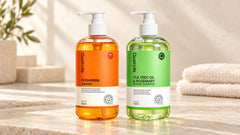
If you are looking for a tea tree shampoo for oily scalp care, QualiLife Tea Tree Shampoo is an option to explore. It is designed to cleanse excess oil and everyday product buildup. Its current ingredient list includes tea tree oil, rosemary extract, niacinamide, biotin, and kava extract.
Focus application on areas where oil and residue tend to collect, then condition according to how your lengths feel. You do not need to add several other scalp-cleansing products to the same wash. Start by noticing how this shampoo works within your routine.
The aim is to find a practical everyday cleansing option. If persistent flakes, significant itching, or red patches are your main concern, it is worth understanding the cause rather than simply switching to a different botanical ingredient.
Frequently Asked Questions
Is tea tree shampoo good for hair?
It can be a useful part of your routine when the formula suits your hair and scalp. Like other shampoos, it helps wash away excess oil and everyday residue. Whether it is a good fit depends on the whole formula, how often you use it, and how your hair feels afterward.
Look for comfortably clean roots and manageable lengths. If your hair becomes rough or tangled, review your washing and conditioning routine rather than assuming every tea tree oil shampoo will work the same way.
Is tea tree shampoo good for dry scalp?
Not necessarily. A tea tree ingredient alone does not make a shampoo suitable for a dry or sensitive scalp. Consider the complete formula and whether washing leaves your scalp feeling tight, itchy, or uncomfortable.
Cleveland Clinic’s guidance on dry scalp explains that some hair products can contribute to irritation and that a gentle, moisturizing shampoo may help. Dry scalp and dandruff can both cause flakes, but they are different problems.
If itching is your main concern, tea tree shampoo is not automatically the answer. Stop using a product that causes irritation, and ask a dermatologist about persistent itching, redness, or flaking.
Is tea tree shampoo good for dandruff?
There is limited evidence of benefit for a specific formula. Mayo Clinic’s review of tea tree oil notes that one study found improvement with a shampoo containing 5% tea tree oil used for four weeks. It also cautions that research has not established that tea tree oil will reliably treat dandruff.
QualiLife Tea Tree Shampoo is intended for cleansing and everyday scalp care, not treating dandruff or other scalp conditions. For ongoing dandruff, ask a pharmacist or dermatologist about an appropriate treatment rather than increasing the amount or contact time of your regular shampoo.
Can you use tea tree shampoo on color-treated hair?
Check the complete formula and the brand’s directions rather than judging by tea tree alone. Choose a product labeled for color-treated hair and follow the care instructions for your particular color treatment.
If you have recently colored, bleached, or had a keratin treatment, ask your stylist about any specific washing or product restrictions.
Can you alternate tea tree shampoo with another shampoo?
You can if it suits your needs, but alternating is optional. If one shampoo cleans effectively and leaves your scalp and hair comfortable, you do not need to add another just to create a more complicated routine.
If you use a medicated shampoo recommended by your dermatologist, follow that treatment plan first.
An easier wash routine does not have to involve more steps. Use an appropriate amount, massage gently, rinse thoroughly, and notice how your scalp and hair feel before your next wash. Those observations can help you make useful adjustments over time.