hair scalp
How to Use a Hair Mask: Application, Timing, and Frequency

In This Guide
You’ve washed your hair, but the ends still feel dry. Your comb catches in the same few spots, and once your hair is dry, the frizz shows up again. Sometimes, your strands could use a little extra conditioning.
Learning how to use a hair mask can make that extra care a simple part of your routine. The details that matter most are where you apply it, how long you leave it on, and how often you use it.
For a typical rinse-out hair mask, shampoo first, gently squeeze out excess water, apply through the mid-lengths and ends, leave it on for the time stated on the label, and rinse thoroughly. Here’s how to make each step work for you.
Hair Mask vs. Conditioner: What’s the Difference?
Conditioner is usually your everyday post-shampoo step. It helps soften strands, reduce tangles, and make your hair easier to manage. A hair mask is often used for more focused conditioning when your lengths feel dry, frizzy, or rough.
Their roles overlap, so you don’t automatically need both in the same wash. You might use conditioner on your usual wash days and set aside one wash for a hair mask to give your mid-lengths and ends extra attention.
If your hair already feels soft and easy to comb, a simple routine may be all you need. If the ends regularly feel dry or catch on one another, a mask can be a useful addition.
How to Apply a Hair Mask, Step by Step
1. Hair Mask Before or After Shampoo?
If you’re wondering when to use a hair mask, most rinse-out conditioning masks belong after shampoo. Wash your scalp and hair, rinse out the shampoo, and then move on to conditioning your strands. If your product is specifically labeled as a pre-shampoo treatment, follow that routine instead.
Think of the two steps as having different jobs: shampoo focuses on cleansing, while your mask focuses on conditioning the lengths. If oily roots are your main concern, our guide to choosing a shampoo for an oily scalp can help you plan the cleansing step.
2. Gently Remove Excess Water
After washing, gently squeeze out excess water with your hands. If needed, lightly blot your hair with a soft towel. Aim for damp hair that is no longer dripping.
There’s no need to twist your hair tightly or rub it back and forth. Removing the extra water makes application easier and helps keep the mask from running off with the drips.
3. Apply in Sections, Focusing on the Mid-Lengths and Ends
Start with a small amount, spread it between your palms, and smooth it through your lengths toward the ends. For long or thick hair, work in sections so you reach the inner layers as well as the surface.
Use enough to coat the strands that need conditioning evenly. You don’t need a thick layer of product over every section. Start small and add a little more wherever you’ve missed a spot.
Keep a regular conditioning mask focused on the mid-lengths and ends. Apply it to your scalp only if the product directions specifically allow it. Gently distribute it with your fingers, and avoid pulling through knots.
4. Set a Timer and Make the Waiting Time Yours
Check the recommended processing time, set a timer, and give yourself something enjoyable to do.
If your mask calls for 8–10 minutes, you don’t have to stand there watching the clock. Use the time for another part of your usual routine, such as shaving or gentle body exfoliation. Once you’re out of the water, you could apply a face mask, listen to part of a podcast, or dry your hands and check your phone somewhere dry.
Choose something you already wanted to do rather than adding extra steps just to fill the time. And don’t forget the timer: when it goes off, it’s time to rinse.
There’s no need to deliberately extend the processing time. Longer doesn’t necessarily mean better results, and leaving some masks on too long can leave hair feeling limp or greasy, as noted in L’Oréal Paris’s hair mask application guide.
If the directions allow it, you can wear a shower cap to hold your hair in place, retain some warmth, and keep the mask off your face and clothing. Follow the product instructions for any specific warming or heat recommendations.
5. Rinse Thoroughly with Comfortable Water
When the time is up, rinse the mask out thoroughly with lukewarm water. Pay attention to the nape of your neck, behind your ears, and the inner sections of your hair, where product is easy to miss.
Your hair can still feel soft and conditioned after rinsing, but there shouldn’t be obvious cream or heavy residue left behind.
If you enjoy a refreshing finish, you can use slightly cooler water for a final rinse. You don’t need to make it icy or uncomfortable. Focus on rinsing thoroughly and keeping the experience pleasant.
6. Blot Gently, Then Blow-Dry on Low Heat
Gently press out excess water with a soft towel or cotton T-shirt, then use your blow-dryer on a low heat setting.
Keep the dryer moving and hold it away from your hair rather than concentrating the airflow on one spot. Use an appropriate heat protectant when heat styling.
The goal is to limit additional heat exposure as you finish your routine. Philip Kingsley’s guide to protecting hair’s keratin recommends using the lowest styling temperature that achieves your result and keeping the dryer at a distance.
How Long Should You Leave a Hair Mask On?
If you’re deciding how long to leave a hair mask on, use the time on your product’s label. Some formulas need only a few minutes, while others call for a longer conditioning session. Choosing one that fits your schedule makes the routine easier to keep.
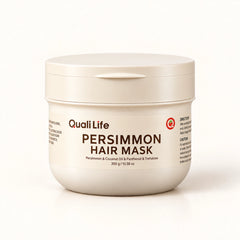
For example, QualiLife Persimmon Hair Mask is applied to damp mid-lengths and ends after shampooing, left on for 3–5 minutes, and rinsed thoroughly. It can replace your regular conditioner for that wash.
An 8–10 minute session can work for a product that recommends it, but it isn’t a universal target. Set your timer for the formula you’re actually using.
How Often Should You Use a Hair Mask?
If your hair regularly feels dry or frizzy, we suggest setting aside time for a suitable hair mask at least once a week. Make it part of a regular wash, such as your weekend routine, so it’s easier to remember.
From there, choosing how often to use a hair mask comes down to the product directions and how your hair feels afterward. Different hair types may need different adjustments.
A Hair Mask for Dry Hair: Make Weekly Care a Habit
When choosing a hair mask for dry hair, focus on conditioning that leaves your strands softer, smoother, and easier to detangle.
During your weekly session, distribute the mask evenly through the areas that feel rough, especially the ends. If your hair still feels dry between treatments and the product supports more frequent use, try adding another session and see whether it improves softness and manageability.
A Hair Mask for Fine Hair: Watch the Amount and Placement
With a hair mask for fine hair, how you apply it matters alongside the formula’s weight.
Start with a small amount and focus on the ends that need conditioning. Avoid piling a rich product onto the roots. If your hair feels flat afterward, try using less, applying it to a smaller area, or leaving more time between sessions. You don’t need to force a schedule that leaves your hair feeling heavy.
A Hair Mask for Oily Hair: Separate Scalp Care from End Care
When looking for a hair mask for oily hair, consider how your ends feel as well as how quickly your roots get greasy. An oily scalp and dry ends can happen together, especially with longer hair or hair exposed to coloring and heat styling.
Cleanse your scalp when you shampoo, then apply your mask to the mid-lengths and ends that need conditioning. Your shampoo schedule and mask schedule don’t have to be identical. For help planning your wash days, read our guide to how often to wash oily hair.
Do You Use Conditioner After a Hair Mask?
Many rinse-out masks that provide substantial conditioning can replace your regular conditioner for that wash. Wella Professionals’ hair masking guide explains that you usually don’t need to follow a conditioning mask with conditioner unless the instructions say otherwise.
The easiest approach is to check the label. If the mask acts as your deep conditioner, apply it after shampooing, leave it on as directed, and rinse. If the product calls for a separate conditioning step, follow that sequence.
If you’re wondering whether to use a hair mask before or after conditioner, first check whether you need both. That often saves you an unnecessary step.
Common Hair Mask Mistakes to Avoid
- Using too much at once. Start with an even coating and add a little more to missed areas rather than applying a thick layer everywhere.
- Applying a regular conditioning mask heavily at the roots. Follow the intended application area, especially if your hair is fine or easily weighed down.
- Assuming extra time means extra benefit. Set a timer and rinse at the recommended time.
- Only rinsing the outer layers. Gently separate your hair so water reaches the inner sections and the nape of your neck.
- Finishing with intense heat. Blot gently and use low heat as you dry.
Frequently Asked Questions
Why Does My Hair Feel Greasy After Using a Hair Mask?
Start by checking how much you used, where you applied it, and how thoroughly you rinsed. Next time, use a little less, focus on the mid-lengths and ends, and rinse carefully. If your hair still feels heavy, try a lighter formula suited to your hair type.
Should You Shampoo Again After a Hair Mask?
For a post-shampoo rinse-out mask, you generally just need to rinse it out thoroughly. Pre-shampoo treatments follow a different sequence, so use their directions. If you regularly feel you need another shampoo to remove your mask, try adjusting the amount and placement first.
Make Weekly Hair Care an Easy Habit
A hair mask doesn’t have to turn wash day into a big project. Choose a convenient wash, apply the product evenly, set a timer, and enjoy a little of your usual routine while you wait.
Start with a regular weekly session for dry lengths and ends, then adjust based on softness, volume, and how easily your hair combs through. A routine that fits your hair and your day is one you’re more likely to keep.